Danube and Yangtze
Two river basins – two keynote speakers
Contaminant transport crosses administrative borders and tackling diffuse pollution in large river basins requires cross-sectorial collaboration between science, policy and management.
Our two keynote speakers will explore two major river basins that, though distant and different, share key traits. The Danube river basin spans 19 countries in Europe, while the Yangtze river basin encompasses 19 provincial-level regions in China. Both ecosystems hold great environmental, economic and social value, yet face serious pollution threats from agriculture, industry and urbanisation.
Prof. Lijing WANG
Key Water Ecology Issues and Management Progress in the Yangtze River Basin
Lijing Wang is a professor at the National Joint Research Center for Yangtze River Conservation (NCYC) in the Chinese Research Academy of Environmental Science (CRAES, Beijing, China), where she leads a research and management group focusing on water ecological environment conservation and management in the Yangtze river.
Eutrophication persists as a critical challenge across lakes and reservoirs in the Yangtze River Basin, driven by intensive anthropogenic pressures and climate-induced hydrological alterations. Most large lakes exhibit eutrophic conditions, with algal blooms increasing in frequency and duration. The problem extends beyond traditional eutrophic lakes like Dianchi to major tributaries and reservoir areas (Three Gorges).
Management policies have transitioned from pollution control to integrated watershed governance under the Yangtze River Protection Law. A series of policy documents have been issued, integrating water environment management, ecosystem restoration, water resources security, and green development. Complementary strategies encompass industrial source control, agricultural non-point pollution management, and systematic aquatic vegetation restoration. These adaptive governance frameworks emphasize science-based decision-making, incorporating real-time monitoring, early warning systems, and interdepartmental coordination to address both conventional pollutants and emerging stressors under evolving climatic conditions. Taking plateau lake Dianchi, plain lake Nanhu, and the Three Gorges Reservoir as representative cases, this report illustrates the progress and effectiveness of eutrophication control across different types of water bodies.
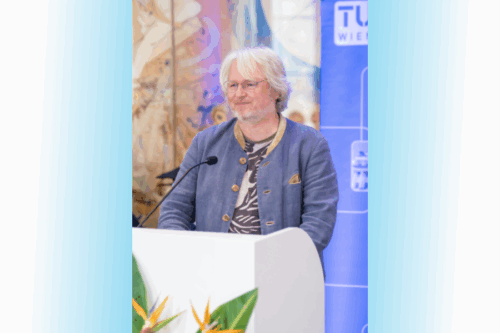
Prof. Matthias ZESSNER
Monitoring, modelling and management of nutrients and trace contaminants in the Danube River Basin – past, present and future challenges
Matthias Zessner is a professor at the Institute for Water Quality and Resource Management at TU Wien (Vienna, Austria), where he leads a research group focusing on water quality and river basin management.
His primary research interest lies in assessing the relationship between anthropogenic activities, emissions to the water cycle, and the resulting in-stream effects on water quality. His recent research has focused on monitoring and modelling to understand and evaluate pollutant sources, pathways and fate at different scales. This includes describing soil-water interactions in small catchments, as well as modelling emissions and developing management approaches at the scale of large river basins. Zessner’s research involves a high level of interdisciplinary engagement, exploring multiple interrelationships with related fields such as hydrology, resource management, agroeconomics, sanitary engineering, and microbiology.
Understanding and tackling water quality and diffuse pollution in the Danube River Basin has been at the heart of Zessner’s work for over three decades. He has played a leading role in numerous transnational research projects, fostering scientific cooperation across borders and advancing innovative approaches to nutrient management, pollution control, and integrated river basin assessment. His expertise has significantly shaped successive Danube River Basin Management Plans, ensuring they are grounded in robust scientific evidence and aligned with European environmental objectives. Additionally, he has provided ongoing support as a scientific advisor to the International Commission for the Protection of the Danube River, strengthening the link between research and practical river basin management.